TLDR: 3 Takeaways from this Post:
Put some math behind your ambition. Calculate the gap between expected revenue and your target, then test what it would take to fill it.
You may have to change more than the goal. A bigger target needs meaningful changes to how you attract and win business, with enough time for those changes to work.
Plan for frequent reality checks. Revisit the assumptions throughout the year, and revise the plan—or the number—when reality gives you a reason.
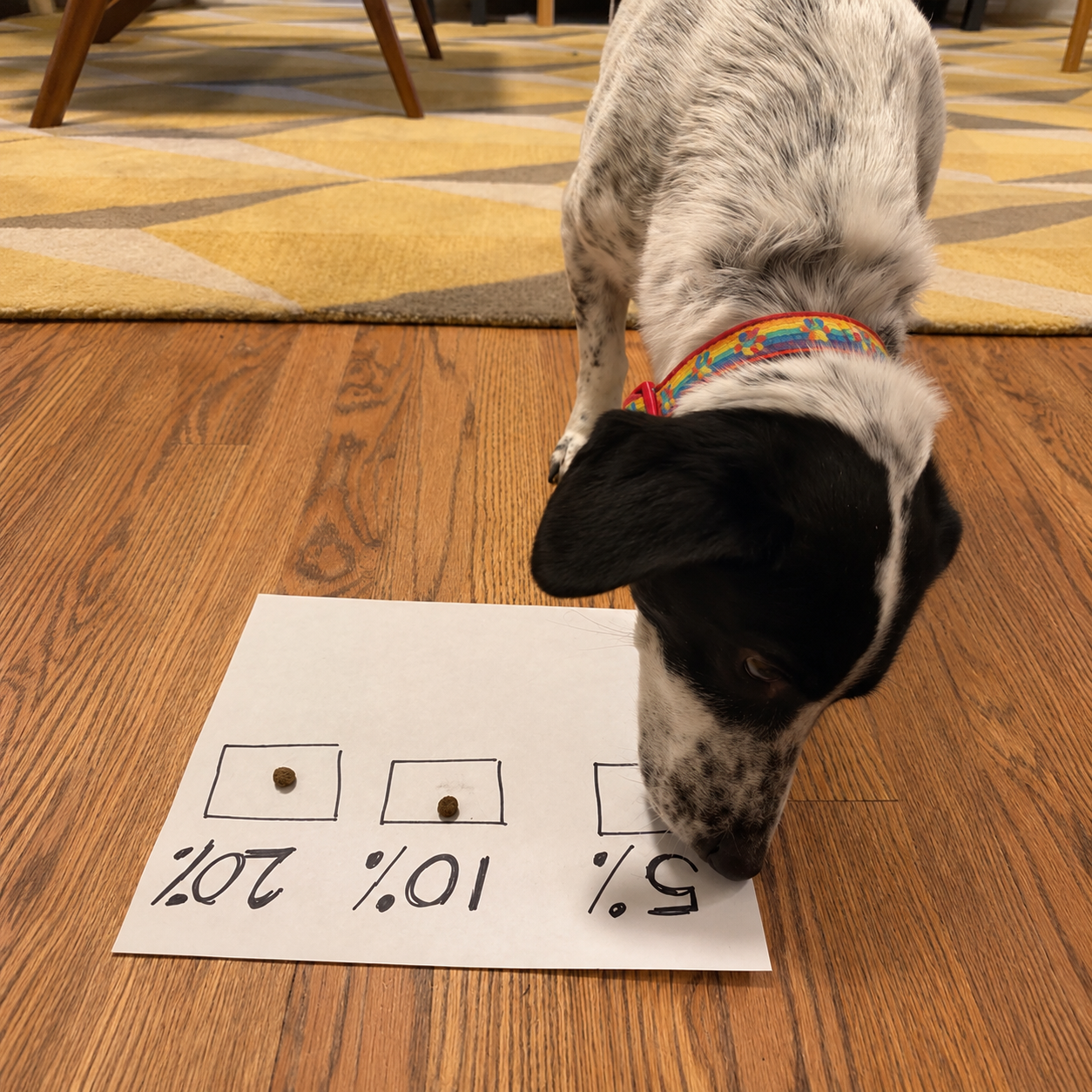
You might be shocked that she went for 5% (such a humble goal!) but look closer - she ate 10% before I was able to capture the picture and we had to start over. So I guess she actually wants to grow by 15%? Except she also ate all of them, which adds up to a growth goal of 45%. As good as any.
You may have good reasons to want the number. Do you have any reason to believe it?
Before you lock in next year's number, give it something real to stand on.
I've seen a growth goal turn into a commitment before anyone figured out what it would take to hit it. I was in those conversations when I ran sales and marketing, and now I see them from the outside as an advisor to leaders of professional services firms.
It's understandable. Leaders need a number to plan around. But a number that feels reasonable quickly becomes the number sales has to deliver, and sales gets told to "rise to the challenge." A lot of the time, nobody did the work to back up that challenge.
Maybe it's 5% because this year was rough and we want to play it safe. Maybe it's 30% because we fell short and want to make up for it. Sometimes we start with the investments we want to make and work backward to a goal. I almost never hear, "This is what the market is telling us," or "This is what our numbers say is possible."
That can get expensive. I once worked with a consulting firm that wanted to grow fast so it would look better to acquirers. They never checked whether the number was realistic, and they didn't change how they went after business. So they said yes to nearly everything and scrambled to deliver work that was all over the place. The delivery team was stretched past capacity. With a sales process too messy to scale, clients weren't getting what they were paying for. By the time buyers showed interest, the client base had become unstable, and it was one of the red flags they noticed.
The size of their number wasn't the problem. A 5% target can be poorly supported, and a 50% target can have a solid path behind it. What matters is whether you understand the assumptions and are ready to act on them. Start with these questions.
Five questions to ask before you approve next year's number
What revenue can we realistically expect from the business we already have?
What kind of growth do we want, and what will it set us up to do next?
How many qualified opportunities, at what win rate, will it take to close the gap?
When will we hire or invest, and what tells us it's time?
What are we changing about how we win business, and when will we check the number again?
1. Start with what you already have
Separate the work that's signed from the work you only expect. Look at signed projects scheduled for next year and the renewals you're likely to get, then subtract contracts that will end or shrink. Don't count the full value of a multiyear contract as next year's revenue.
Then put a number on the gap. Say you'll finish this year at $14 million and you want to grow 20% to $16.8 million. Let’s take a closer look:
Next year's target: $16.8 million
Expected from existing business, after losses and completed projects: $12.6 million
Additional revenue needed: $4.2 million
That's a different challenge from "find another $2.8 million."
Take a hard look at what's behind your starting point, too. Did this year include an unusually large project? Did a price increase lift revenue while the number of clients stayed flat? A yearly total can hide a lot.
2. Decide which growth is worth having
A big project can lift revenue while tying up your best people on thin margins. When it ends, you may have nothing to build on.
Your current clients can show you what you want more of:
Look past who spends the most. Which relationships are profitable once you count the real effort? Which ones lead to repeat work or build expertise you want to be known for?
Notice which clients take more effort than the fee covers. Do you keep selling work that leans on a few overextended specialists?
Check your dependence on large accounts. Would losing one big client put the business in a difficult position?
Use those patterns to describe your ideal future client, someone who values what you do and who you can serve well.
Then put an estimate on each source of growth, and don't count the same revenue twice across account expansion and new services. What you're really asking is how next year's work puts you in a better position for the year after.
3. Work backward from revenue to the work required
Suppose that $4.2 million gap has to come entirely from new clients. Here's what that could look like:
Average revenue per new client next year: $280,000
New clients needed: 15
Win rate on qualified opportunities: 25%
Qualified opportunities needed: about 60
How does that compare with this year? If you had 30, what would make 60 possible? If you're assuming a better win rate, what's going to improve it?
Then look at timing. A client you sign in October may contribute little revenue by December. Count what you expect to actually recognize next year, including the length of your sales cycle and the gap between signing and starting the work. You're trying to find out what has to be true for the goal to work.
4. Build it into the business plan, then keep checking it
In services, you can't add people overnight. If the goal depends on new expertise or better systems, the plan has to pay for that before the work shows up. Sales and delivery need to agree on what work is likely and what it will take to do it. They also need to agree on when to act: how much demand justifies a hire (remember it takes time to bring someone up to speed), and how much volume justifies new systems.
Then treat the goal as something you'll revisit. Clients change their plans, and the work you win may need different expertise than you expected. We put a lot of weight on whether the business hits its number in December, and not enough on whether the number still makes sense along the way.
Review it every quarter, and sooner if something big changes:
Are renewals and signed work coming in as expected?
Are you attracting the work and clients you want?
Do your actual win rates and sales cycle support the plan?
Does your team still fit the work coming in? Has it hit one of your hiring or investment triggers?
Be willing to change the goal as well as the plan, up or down. Explain what changed and why. Holding people to an assumption that no longer holds up won't make it true.
5. For things to change, things need to change
Your marketing doesn't get better just because you need it to. If you want a different result next year, what will you change about how you attract and win business? Start with where your current approach falls short:
If prospects struggle to see why they should choose you, more visibility may just put an unclear story in front of more people. Fix the message first.
If you're spreading your marketing across every service and every type of client, you can leave each without enough support to make a difference. Pick the opportunity with the best chance to grow and put enough behind it to learn whether it works.
Look at which channels bring the right people into a conversation, and what happens after that.
If too few of the right buyers know you exist, decide how you'll reach them. That might mean building referral relationships or getting in front of an industry audience. Paid ads could also make sense where you have evidence that they bring in the right opportunities.
These are examples. What needs to change in your business will depend on what you've learned.
Work backward from when you need the revenue. If it takes six months to go from a first conversation to signed work, a campaign you launch in January is unlikely to close a first-quarter gap. Make these choices while you're planning, and make sure your Q1 priorities say who owns each change and how you'll know it's working. A bigger target needs a believable explanation for why next year will go differently.
Give the number something real to stand on
You may finish this process with a more ambitious goal. Or you may keep the number and realize you need to invest before the growth can follow. Both are worth knowing before you ask your team to commit.
If you're planning for next year, I'd be glad to be a second set of eyes. Let's talk.
Keep Reading