How Redrock Turned Its Culture Into a Growth Strategy
“Without this work, it would have been difficult to continue scaling the business effectively. Without that foundation, we would have risked growing in size without growing in alignment. Working with Deb is a joyful process for everyone involved, and the work you do together will be profound!”
The Situation: Hollywood’s Best Kept Secret
Redrock spent decades building an entertainment company with a reputation for extraordinary work and a culture people genuinely loved.
They also had big ambitions. They wanted to grow, and to use that growth to prove that excellence and ambition can coexist with kindness and care. Even in Hollywood.
But they had a problem.
The company had grown to include multiple divisions, capabilities, and ways of working without articulating what connected them or where they were headed. Employees loved Redrock, but they didn’t understand the business strategy or how their work fed into it.
And if the people inside Redrock couldn't explain what made the company different, the outside world didn't have a chance.
As Redrock put it:
"Despite decades of delivering world-class work, we still referred to ourselves as 'Hollywood's best kept secret.' We had never clearly articulated our story, and our organization wasn't structured in a way that made it easy for clients, partners, or prospective employees to understand who we were or what made us different."
Redrock was growing up as a business. They needed to get explicit about things that had previously just been understood.
The Challenge: Getting the Truth Into Language
We weren’t there to invent a purpose or culture for Redrock. It was already there. We needed to get it out of people’s heads and into language the organization could actually use to make decisions, align its teams, tell its story, and grow with intention.
"We engaged Deb to help us articulate what already existed within the organization, to give words to what our people inherently knew and believed."
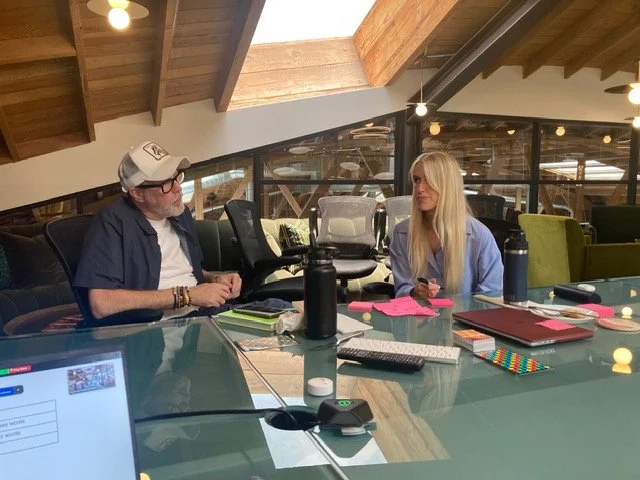
We started with Redrock’s leadership team, using facilitated exercises to surface what they believed about the company, the industry, and the kind of business they wanted to build.
At first, everyone came at it from a different angle. One person talked about the work. Another talked about the people. Someone else told a story about a moment they were particularly proud of.
Then you start to hear the harmony.
The same ideas show up in different stories, different words, different experiences. For Redrock, they kept coming back to extraordinary creative work, empowering talented people, real relationships, excellence, resourcefulness, kindness, and a genuine desire to make a notoriously brutal industry better for the people in it.
Once we had that foundation, the questions got bigger:
If Redrock wanted to make the industry better, what would the company need to become to have that kind of impact?
If kindness and relationships were core to the culture, how would they protect those things as they grew?
Did the way the business was organized actually support the global ambitions they had for it?
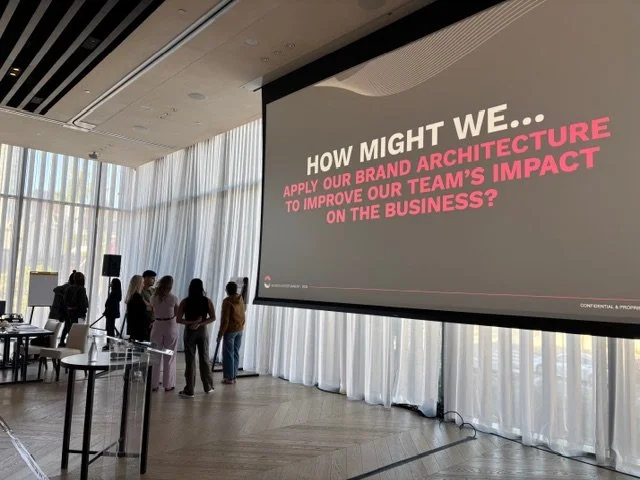
Those questions moved us past mission and values. We looked at how departments fit together, how the brand should be organized, where sales and marketing needed to change, and where their way of working was getting in the way of where they wanted to go.
What looked like a brand problem in one place, a process problem in another, and a leadership problem somewhere else turned out to be connected by invisible strings.
Pull on one, and the others move.
The Approach: From Values to Choices
Over a series of working sessions, we built a concrete picture of the Redrock they were trying to become. Where were they already succeeding? Where weren’t they? And what were the biggest gaps between the company they had and the company they wanted to build?
Then we got practical.
Redrock chose to operate as one unified brand instead of a set of disconnected businesses. The conversation shifted from revenue growth alone to profitable growth. Sales, which had been distributed among executives, became its own strategic workstream.
Process, systems, organizational structure, onboarding, internal communication, accountability: all of it became part of the growth agenda. And we turned that agenda into a roadmap with real owners attached.
A conversation that started with mission and values was now shaping how the company operated, sold, communicated, and grew.
From there, I worked individually with Redrock’s leaders to help them translate the company vision into their own teams. What did it mean for their priorities? Where did their team need to evolve? What did they need to do differently to move the larger strategy forward?
The Tuesday Test
One of my favorite examples of the strategy becoming real came during a quiet stretch when client work slowed down. In a project-based business, that creates an immediate question: What should everyone be working on?
Thanks to this work. Redrock had an answer.
Leaders could look at the roadmap and deploy available capacity against work the company had already agreed was important to its future.
The strategy wasn’t sitting on a shelf. It gave people something useful to do on a Tuesday.
That’s a pretty good test of whether a strategy is actually working.
The work also needed to move beyond the leadership team.
One observation from our early work captured the issue perfectly:
"People love the company but they don't understand it, which is a problem because they can contribute to the culture but not the right kind of growth."
Redrock already had the commitment. More people needed the context to contribute to the growth.
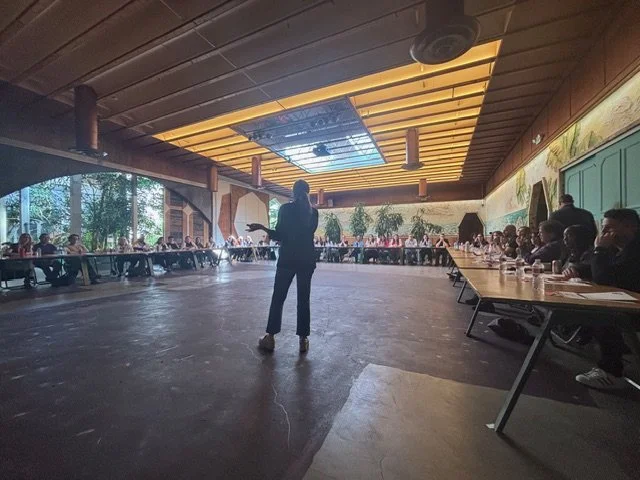
At a company summit, employees explored what Redrock’s mission and values meant for their own work: what excited them, how they could contribute, and what they still wanted to understand. The goal wasn’t for everyone to memorize a mission statement. It was for more people to understand where Redrock was going and see how they could help get it there.
The Results: Why the Partnership Worked
"What ultimately set Deb apart was her ability to move beyond corporate jargon while still bringing a high level of strategic thinking and professionalism. She has a unique ability to meet people where they are, build trust quickly, and facilitate meaningful conversations that feel authentic rather than forced."
That trust matters because this work touches growth, money, accountability, leadership, and culture all at once.
People need to be able to disagree. They need to say the thing they haven’t completely figured out yet. They need to challenge each other without damaging the relationships that make the company work.
And, preferably, we should have some fun doing it.
As Redrock put it:
"Working with Deb is a joyful process for everyone involved, and the work you do together will be profound!"
Joyful and profound. I’ll take both.
Growing in Size, and in Alignment
The goal was never to hand over a finished strategy. It was to create enough clarity for Redrock to make better decisions now and keep navigating the new questions that come with growth.
A successful company gets bigger, more complex, more ambitious. The things people used to just know aren’t universally known anymore. More people have to make good decisions without being in every conversation.
It doesn’t mean the company has lost its way. It means some things that used to happen naturally now need to happen on purpose.
For Redrock, getting growth right wasn’t just about building a bigger company. It was about building a better kind of entertainment company.